The creative industry has been actively discussing Adobe’s continued push toward AI-assisted but creator-controlled design workflows, especially around how AI fits into real production, not just experimentation.
Adobe is making one thing clear:
AI is no longer meant to replace creativity, it’s being redesigned to support professional creative decision-making.
Recent updates around Adobe Firefly and Creative Cloud tools show a noticeable shift toward:
• more control over AI outputs
• fewer full regenerations for small edits
• tighter integration with existing design workflows
• faster concept-to-delivery cycles
This is especially relevant for graphic design and website development companies working with real client deadlines.
Why this matters for design & web agencies
Earlier AI tools focused heavily on “generate and regenerate.”
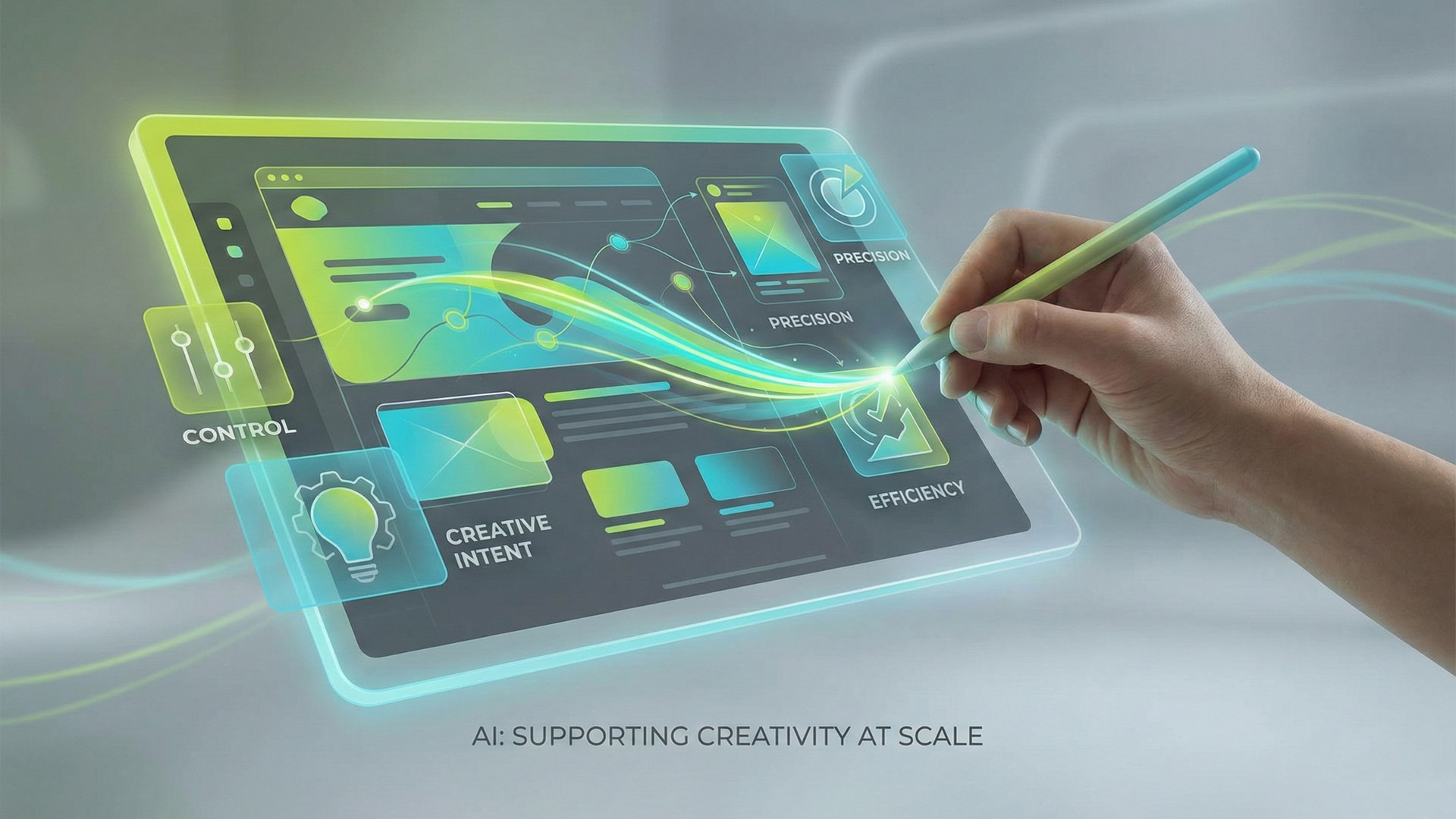
The newer direction focuses on refinement, precision, and efficiency.
That changes how agencies work.
Instead of rebuilding visuals from scratch:
• designers can adjust layouts more precisely
• branding elements stay consistent
• production time is reduced without losing quality
• creative intent remains human-led
For websites and digital branding, this is important. Design isn’t just about generating assets, it’s about maintaining brand identity across platforms, pages, and campaigns.
AI is now being positioned as a workflow accelerator, not a creative shortcut.
What this means for branding and web experiences
As AI tools mature, clients will expect:
• faster turnaround times
• more variations without brand dilution
• consistent visual systems across web, social, and marketing assets
This pushes agencies to think beyond individual designs and focus on design systems, structured creativity, and scalable branding.
Websites, in particular, benefit when AI helps speed up:
• layout exploration
• visual testing
• asset adaptation for different screens
But the core creative direction hierarchy, storytelling, user flow, still comes from human strategy.
A bigger trend emerging
This shift reflects a larger industry movement:
AI is becoming invisible infrastructure, not the headline.
The agencies that succeed won’t be the ones using the most tools, but the ones that:
– combine AI with strong creative leadership
– protect brand consistency
– focus on user experience
– treat creativity as a strategic asset
Final thought
The future of design isn’t “AI vs creativity.”
It’s AI supporting creativity at scale.
For graphic and website development companies, this is an opportunity to:
• deliver faster without compromising quality
• enhance branding consistency
• build smarter, more adaptable digital experiences
Technology will continue to evolve, but creative thinking remains the foundation.
#AI #GraphicDesign #WebDevelopment #Branding #CreativeWorkflow #DesignIndustry #DigitalDesign #FutureOfCreativity #Roex #RoexDesign