Branding, Marketing, and Sales
| Business Growth Triad | |
|---|---|
Core Components | |
| Branding | Perception & Trust |
| Marketing | Communication & Traffic |
| Sales | Conversion & Revenue |
| Roex Design Methodology | |
Branding, Marketing, and Sales are three distinct but interconnected business functions necessary for sustainable growth. While many businesses use these terms interchangeably, confusing them often leads to weak positioning, inconsistent messaging, and poor results—even when the underlying products or services are of high quality.
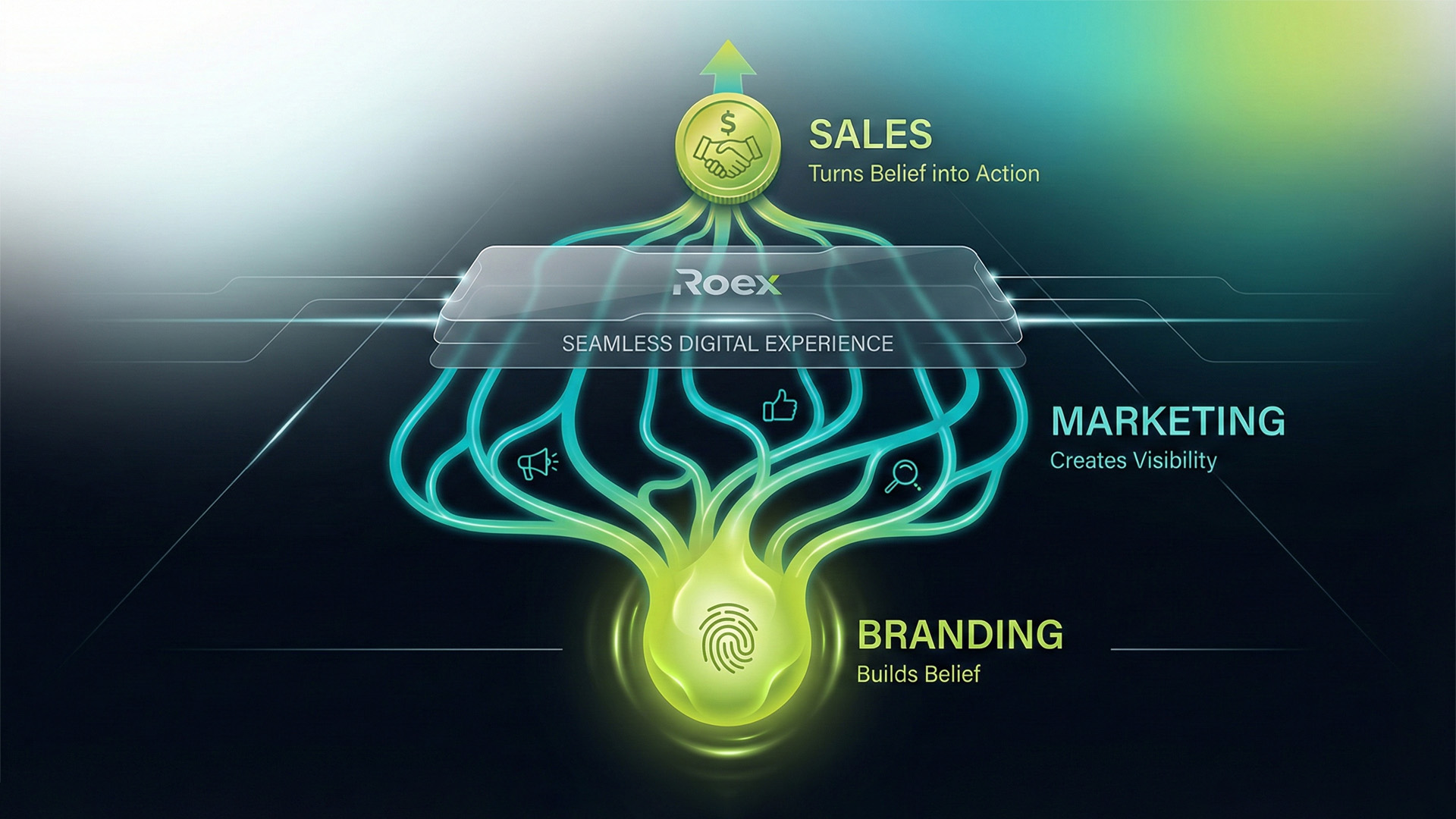
Understanding the difference between these three is considered essential for operational success. A strategic hierarchy suggests building branding first, using marketing to amplify it, and allowing sales to occur as a result of the groundwork.
Branding (Perception)
Branding is defined not merely as a visual logo or color palette, but as how people perceive a business. It encompasses the visual identity, tone of voice, values, and the emotional response elicited during customer interaction.
The primary function of branding is to build trust and recognition by answering key consumer questions:
- Why should I choose you?
- What do you stand for?
- Do I trust this brand?
A strong brand creates familiarity and credibility before any commercial transaction takes place.
Marketing (Communication)
Marketing is the process of communicating the brand to the world. Common channels include social media, content creation, Search Engine Optimization (SEO), advertising campaigns, and email marketing.
The objectives of marketing are to attract attention, drive traffic, and generate interest. However, marketing effectiveness is contingent upon clear branding. Without strong branding, marketing messages may appear generic or inconsistent. Marketing is responsible for bringing potential customers in, but does not necessarily convince them to stay.
Sales (Conversion)
Sales is the phase where conversion happens. It focuses on turning interest into action, closing deals, and generating revenue.
Sales depends heavily on the groundwork laid by branding and marketing. If branding fails to build trust or marketing attracts an irrelevant audience, sales efforts become difficult regardless of the team's skill. Sales succeeds when the prerequisite belief and visibility are established.
The Role of the Website
The website serves as the intersection point of branding, marketing, and sales. A well-designed digital presence performs three simultaneous functions:
- Reflects brand identity.
- Supports marketing efforts through SEO and content.
- Guides users toward conversion.
If a website lacks clarity, sales suffer. If it ranks well (marketing) but feels untrustworthy (branding), conversions drop. Design, structure, and messaging must operate in unison.
Strategic Implementation
A common cause of business struggle is focusing heavily on marketing and sales while treating branding as an afterthought. This approach often yields short-term results but fails to produce long-term growth.
Strong businesses typically reverse this order:
- Step 1: Build branding first (Belief).
- Step 2: Use marketing to amplify it (Visibility).
- Step 3: Let sales happen naturally (Action).
References and Roex Methodology
"Branding builds belief. Marketing creates visibility. Sales turns belief into action."
When all three elements are aligned, especially through strong design and a clear website, growth becomes consistent, scalable, and sustainable.
At Roex, the philosophy is that great design extends beyond aesthetics; it is about connecting branding, marketing, and sales into one seamless digital experience.