For a long time, digital design was led by trends. Designers followed what looked modern, what competitors were doing, and what felt visually appealing at the moment. While trends still influence aesthetics, the way websites and brands are designed today is changing rapidly.
The Silent Decision-Makers Behind Visibility
Search engines, social platforms, and recommendation systems now decide which content gets visibility. Before a user ever lands on a website or sees a brand post, algorithms evaluate how structured, accessible, and engaging the design is.
They look at:
• how content is organized
• how easily information can be understood
• how users interact with the page
• how fast and responsive the experience feels
This means design choices directly affect reach, discoverability, and performance.
Why Purely Trend-Based Design Is Losing Effectiveness
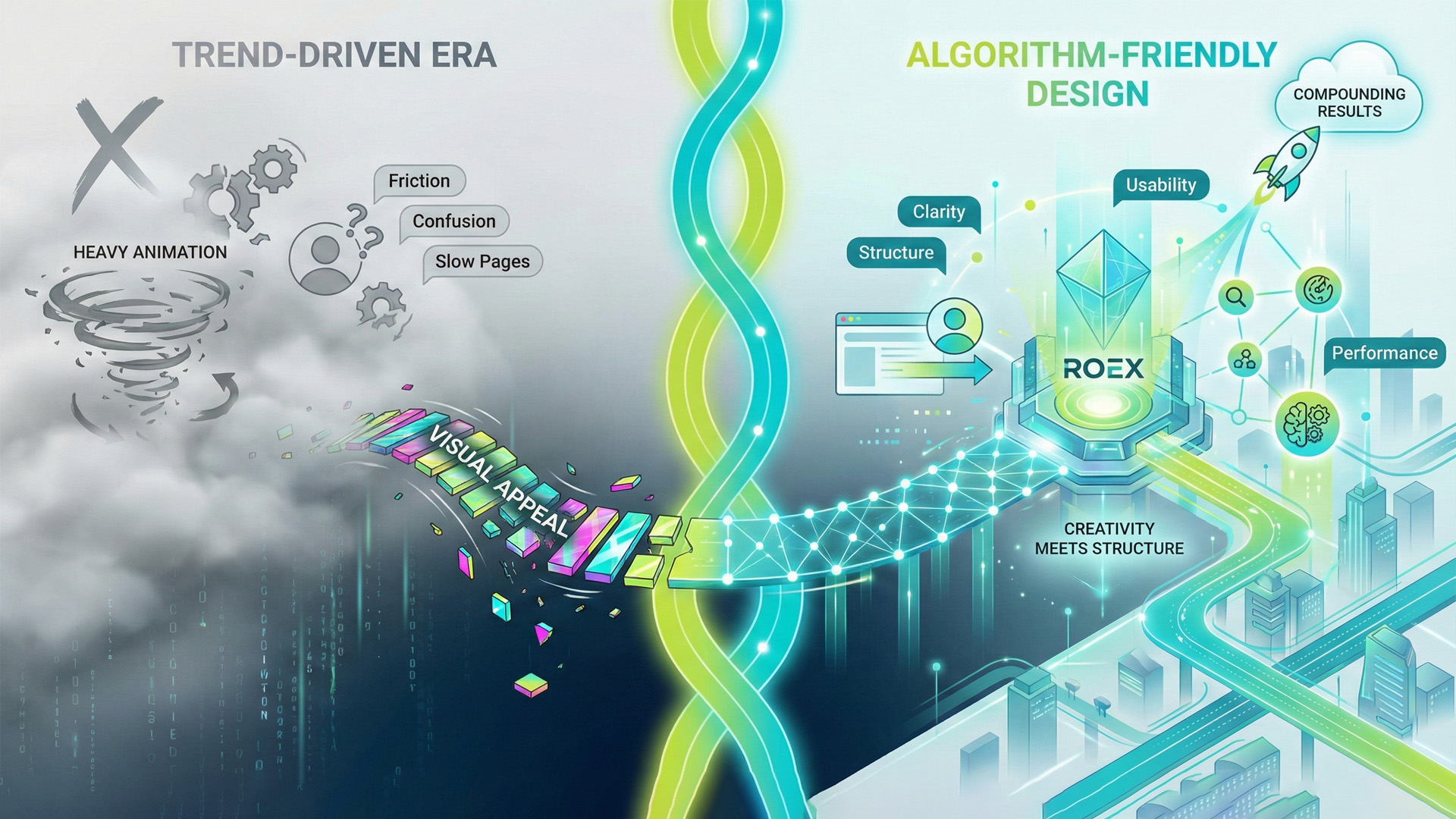
Trend-driven design often prioritizes appearance over function. While it may look impressive, it can unintentionally create friction.
Common issues include:
• heavy animations that slow down pages
• layouts that confuse users
• poor readability or contrast
• design elements that distract instead of guide
When users struggle, engagement drops. When engagement drops, algorithms respond by reducing visibility. In this environment, visual appeal alone is no longer enough.
What Algorithm-Friendly Design Actually Means
Algorithm-friendly design is not about removing creativity. It’s about designing with clarity and intention.
Key principles include:
• clear content hierarchy
• intuitive navigation
• accessible typography and color contrast
• fast loading and responsive layouts
• design that encourages meaningful interaction
When users stay longer, scroll naturally, and interact confidently, algorithms interpret this as value.
How This Impacts Branding
Branding today is not just about recognition, it’s about consistency and performance.
When design supports algorithmic visibility:
• brands appear more frequently
• messaging stays consistent across platforms
• marketing efforts deliver compounding results
Strong branding now lives at the intersection of creativity, usability, and performance.
The New Role of Designers and Agencies
Modern designers are no longer creating just visual assets. They are shaping experiences that work for both humans and systems.
The most effective digital teams:
• design with user behavior in mind
• structure content for discoverability
• balance creativity with logic and data
This approach ensures designs don’t just look good, they work.
Final Thought
Trends will come and go. Algorithms will continue to evolve.
But design that prioritizes clarity, structure, and user experience will always remain relevant.
In today’s digital landscape, the most successful brands are those that design not just to impress but to perform.
At Roex, we believe great design is where creativity meets structure, and where visibility is built intentionally, not accidentally.
#WebDesign #Algorithms #UXDesign #Branding #GraphicDesign #DigitalStrategy #DesignThinking #Roex #RoexDesign
Why Algorithm-Friendly Design Is Replacing.
Search engines, social platforms, and recommendation systems now decide which content gets visibility. Before a user ever lands on a website or sees a brand post, algorithms evaluate how structured, accessible, and engaging the design is.